Licensed & Insured — NJ HIC #13VH13359900
njgoldstarconstruction@yahoo.com · 24/7 Emergency · (862) 271-1225
Deep Chimney Cleaning & Creosote Removal in Bergen County, NJ
Full flue cleaning and creosote removal with drop-cloth protection and vacuum containment, plus a documented inspection of the liner, damper and smoke chamber.
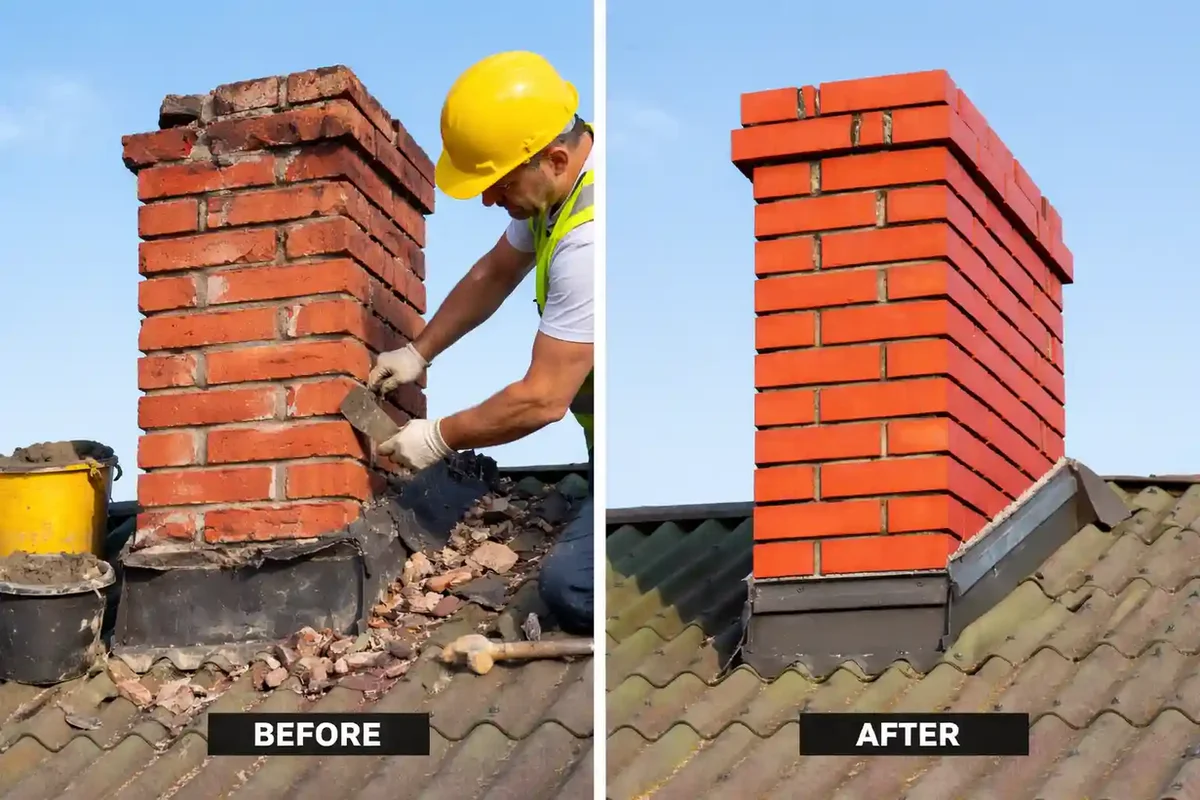
Creosote is the fuel behind most chimney fires. We remove it to the flue walls, not just brush the easy section, and show you photos of what the flue looked like before and after.
This is one part of the chimney work we do across Bergen and Passaic County. Every job is quoted in writing after a hands-on inspection, performed by our own crew rather than subcontractors, and backed by our satisfaction guarantee. We are licensed under NJ HIC #13VH13359900 and fully insured.
What the work includes
- Rotary and brush cleaning of the full flue length
- Vacuum containment — no soot in the room
- Smoke chamber, damper and firebox cleaning
- Photo-documented flue inspection report
The three stages of creosote, and why the third one is dangerous
Creosote builds up in stages as wood smoke condenses inside a cooling flue: a light, sooty first stage that brushes off easily, a flakier second stage that takes more effort, and a hardened, tar-like third-stage glaze that resists a standard brush entirely and burns hotter and faster than wood itself. Chimney fires are far more common once creosote has reached that glazed stage.
Not all creosote is equally dangerous, which is part of why annual cleaning matters more than an occasional deep clean every few years. Early-stage soot is loose and low-risk. As it accumulates and is exposed to repeated heat cycling, it can harden into a shiny, tar-like glaze bonded to the flue walls — CSIA’s homeowner guidance notes that even a relatively thin layer of sooty buildup, and certainly any glazed creosote, is enough to fuel a chimney fire capable of damaging the flue or spreading into the house. Glazed creosote does not respond to a normal brush cleaning and needs specialized chemical or mechanical treatment to remove safely.
Why annual cleaning is a fire-code requirement, not a suggestion
NFPA 211, the national fire code governing chimneys and venting, calls for chimneys in regular use to be inspected — and cleaned when deposits are found — at least once a year, with heavier wood-burning households sometimes needing it twice. The rule exists because creosote is a fuel source sitting inside your house, not because of aesthetics or draft performance alone.
A chimney used only occasionally still needs the same annual check, because creosote accumulation depends more on how the fire is burned — smoldering, low-oxygen fires from unseasoned wood produce far more creosote than a hot, well-ventilated fire — than on total hours of use. We schedule cleaning before the heating season starts whenever possible, since that is when a buildup from the prior winter is easiest to catch before the first fire of the year re-ignites any residual creosote left in the flue.
Warning signs of a chimney fire, and what already happened if you missed them
A loud cracking or popping sound from inside the chimney, a dense cloud of dark smoke visible from outside, an intense, sustained roar like a low-flying plane, and a chimney that stays hot to the touch well after the fire dies down are the signs of an active chimney fire. Some chimney fires are quieter and only discovered afterward through warped metal, cracked flue tiles, or heat-damaged roofing near the chimney.
Not every chimney fire announces itself loudly. A slow-burning chimney fire can happen with almost no visible sign from inside the house, and the only evidence afterward is damage to the flue itself — a reason a post-fire Level 2 camera inspection matters even when nothing dramatic was noticed at the time. If you suspect a chimney fire has occurred, whether or not it was obvious when it happened, the flue should be inspected before the next fire is lit, not after.
Outdoor signs are sometimes easier to catch than what’s happening inside the flue: scorched or discolored roofing shingles near the chimney, a damaged or dislodged cap, or dense smoke and sparks visible from the yard during a fire are all worth treating as a signal to stop using the appliance and schedule an inspection, rather than something to note and forget once the flames die down.
Heating fires are more common than most homeowners assume
National fire data shows an average of roughly 34,200 residential heating fires a year, with confined chimney and flue fires accounting for the large majority of them — and creosote buildup from wood burning is the leading contributor. These are not rare, freak events; they are a predictable, largely preventable consequence of a flue that has gone too long without cleaning.
The U.S. Fire Administration’s analysis of residential heating fires puts real numbers behind what chimney sweeps see every season: fires confined to chimneys, flues and fuel burners make up the great majority of all residential heating fires, well ahead of any other single cause. That statistic is the practical argument for treating chimney cleaning as an annual line item rather than something to defer until a problem is already visible.
What a deep cleaning actually involves, start to finish
A deep chimney cleaning removes creosote and debris from the full length of the flue, the smoke chamber, the damper and the firebox, with the work area protected from soot the whole time it’s in progress. You get a documented before-and-after look at the flue interior, not just an assurance that the job is done.
If the inspection turns up liner damage, cracked mortar, or a crown or cap issue while we’re cleaning, we note it in the written report rather than treating cleaning and repair as unrelated services — see our chimney liner and chimney repair pages for what those fixes involve.
Protect the work area
Drop cloths and containment go down around the hearth or appliance before any brushing begins, so soot stays contained rather than tracked through the house.
Brush and rotary cleaning
We clean the full interior length of the flue, adapting brush or rotary tools to whatever creosote stage we find, including specialized treatment for glazed buildup that a standard brush won’t remove.
Vacuum containment throughout
A HEPA-rated vacuum runs continuously during brushing so loosened soot and creosote are captured rather than settling back down the flue or into the room.
Smoke chamber, damper and firebox
These areas trap their own debris and creosote separate from the flue itself, and get cleaned as part of the same visit rather than left out.
Photo-documented inspection
You receive photos of the flue interior after cleaning along with any findings — a damaged liner, deteriorated mortar, or a crack that needs its own repair.
Cleaning needs differ by fuel type and appliance
Wood-burning fireplaces and stoves need the most frequent creosote-focused cleaning, since creosote is a direct byproduct of wood combustion. Oil-fired furnace and boiler flues accumulate soot deposits from combustion residue rather than creosote specifically, and still need annual cleaning to maintain proper draft and prevent buildup from restricting airflow or corroding the liner.
The mechanism differs by fuel, but the annual schedule doesn’t change much across them. Oil-fired appliances in particular can deposit soot quickly if the burner is out of adjustment, which is one more reason the annual chimney visit and the annual furnace service tend to work best scheduled together rather than treated as unrelated maintenance. Gas appliances produce the least buildup of any common fuel type but are not maintenance-free — a blocked or corroded gas flue is still a venting hazard, which is why we inspect gas-vented chimneys on the same annual cycle even when there is little or nothing to actually brush out.
For the full range of chimney services beyond cleaning, see our chimney repair, rebuilds and cleaning overview, or if you’re in Teaneck, Glen Rock or elsewhere in Bergen and Passaic County, contact us for a free written estimate.
Related chimney services
Partial and full chimney rebuilds — taking the stack down to sound masonry and rebuilding with m…
Stainless steel liner installation for fireplaces, furnaces, boilers and water heaters, sized to…
Targeted chimney repair — repointing failed joints, replacing spalled brick, rebuilding a cracke…
Stainless and copper chimney cap installation and replacement to keep rain, debris, birds and sq…
Replacement of rusted chase covers on framed chimney chases with stainless or copper covers, cro…
Frequently asked questions
How do I know if I have heavy creosote?
A shiny black glaze on the flue, a strong campfire smell in warm weather, or reduced draft all indicate buildup. Glazed creosote needs specialist treatment, not just brushing.
Do gas fireplaces need cleaning?
They need annual inspection. Gas produces little creosote but liners corrode, and blockages and animal nests still occur.
What's the difference between first-stage soot and glazed creosote?
First-stage creosote is loose, flaky soot that a standard chimney brush removes without much difficulty. Glazed, or third-stage, creosote has hardened into a shiny, tar-like coating bonded to the flue wall that a standard brush cannot remove and that burns hotter and more dangerously than the earlier stages. Glazed creosote needs specialized chemical or mechanical treatment, not routine brushing.
Can I clean my own chimney instead of hiring a sweep?
You can do light DIY brushing on an easily accessible flue with basic buildup, but glazed creosote, any buildup you can’t identify, and anything requiring roof access are not a reasonable do-it-yourself job. A professional cleaning also includes the inspection and documentation that tells you whether the chimney is otherwise sound, which brushing alone does not confirm.
Does an oil-fired furnace flue need annual cleaning too?
Yes. Oil combustion deposits soot in the flue that, left unaddressed, restricts draft and can corrode a liner over time, even though it isn’t the same creosote produced by wood burning. We recommend cleaning the flue on the same annual schedule as the furnace’s own service.
What should I do if I think a chimney fire already happened?
Stop using the fireplace or appliance and have the flue inspected before lighting another fire, even if you didn’t notice obvious signs at the time. A chimney fire can warp metal components, crack flue tiles or damage a liner without an obvious external sign, and using the chimney again before that damage is found is a real risk.
- Homeowner Resources — Chimney Safety Institute of America (CSIA)
- Heating Fires in Residential Buildings (2017-2019) — U.S. Fire Administration
- Carbon Monoxide Fact Sheet — U.S. Consumer Product Safety Commission (CPSC)
Updated September 2026 · Reviewed by Edgar Lopez Gonzalez, owner · NJ HIC #13VH13359900
Licensed & insured. 25+ years in North Jersey. We answer 24/7 for leaks and storm damage.
- Service
- Deep Chimney Cleaning & Creosote Removal
- Category
- Chimney
- Service area
- Bergen & Passaic County and surrounding North Jersey
- License
- NJ HIC #13VH13359900