Licensed & Insured — NJ HIC #13VH13359900
njgoldstarconstruction@yahoo.com · 24/7 Emergency · (862) 271-1225
Chimney Liner Installation in Bergen County, NJ
Stainless steel liner installation for fireplaces, furnaces, boilers and water heaters, sized to the appliance and insulated where clearances require it.
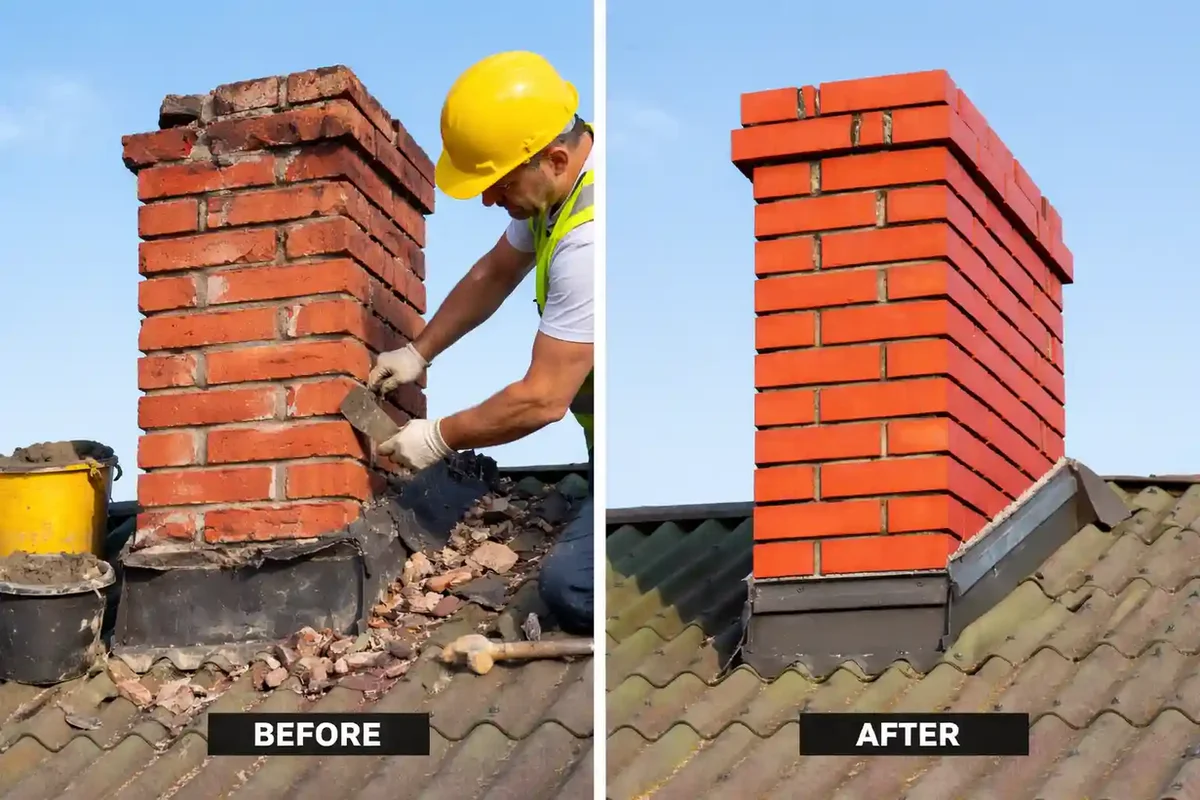
An unlined or cracked flue vents combustion gases into the house structure. A correctly sized stainless liner is the fix, and it also improves draft on an oversized flue.
This is one part of the chimney work we do across Bergen and Passaic County. Every job is quoted in writing after a hands-on inspection, performed by our own crew rather than subcontractors, and backed by our satisfaction guarantee. We are licensed under NJ HIC #13VH13359900 and fully insured.
What the work includes
- Rigid and flexible stainless liners
- Sized to appliance output, not to the old flue
- Insulated liners for zero-clearance situations
- Top plate, cap and connector installation
Clay tile, stainless steel or cast-in-place: which liner is which
Most older Bergen and Passaic County chimneys were originally built with clay tile liners, which are durable but crack under thermal shock and cannot be resized. Stainless steel liners are flexible or rigid metal sections sized to the specific appliance; cast-in-place liners are a poured, seamless lining used when the existing flue is structurally compromised or badly out of round.
| Type | Typical use | Key limitation |
|---|---|---|
| Clay tile | Original liner in most pre-1980s masonry chimneys | Cracks from thermal shock or age; fixed size, cannot be resized without relining |
| Stainless steel | Relining for furnaces, boilers, water heaters and fireplace inserts | Must be correctly sized and, for gas and oil, often insulated |
| Cast-in-place | Structurally weak, out-of-round or badly deteriorated flues | More involved installation; not always necessary for a straightforward reline |
A cracked or missing clay tile section does not necessarily mean the whole chimney is unsound — it means the flue is no longer providing a continuous, sealed path for combustion gases, which is a separate problem from the surrounding masonry. In many cases we can install a stainless liner inside the existing clay-lined flue without touching the brick at all, which is often the fastest and least disruptive fix. Where the existing flue is too damaged or irregular for a liner to be pulled through cleanly, cast-in-place lining rebuilds the interior surface directly.
UL 1777: the testing standard behind a listed stainless liner
UL 1777 is the safety standard that stainless steel chimney liner systems are tested against, covering both flexible and rigid designs. It evaluates how a liner performs under sustained high operating temperatures and simulated chimney-fire conditions, and a liner that passes has to contain that heat without transferring enough of it to ignite anything combustible outside the masonry.
Not every liner sold is tested to the same standard, and it matters: a liner that has not been evaluated for chimney-fire conditions is a liability in exactly the situation where a liner is supposed to protect the house. We install stainless liner systems listed to UL 1777 rather than uncertified alternatives, matched to the appliance type — Type L for oil and higher-temperature applications, and construction rated for the specific fuel and appliance category being vented.
Why the liner has to be sized to the appliance, not the flue opening
A liner that is too large for the appliance connected to it reduces draft velocity, which lets flue gases cool before they exit and increases condensation inside the liner. A liner that is too small restricts flow and can cause spillage back into the house. Correct sizing is calculated from the appliance’s input rating and vent connector, not simply matched to the existing flue’s interior dimensions.
This is one of the most common sizing mistakes we find on older chimneys: a flue originally sized for a large, inefficient furnace and water heater venting together is often oversized once one appliance is removed or replaced with a smaller or more efficient unit. An oversized flue does not draft as strongly, which shows up as excess condensation staining inside the chimney, a lingering smoke smell, or a water heater that spills exhaust back into the mechanical room instead of venting cleanly. Sizing correctly the first time, based on the manufacturer’s venting tables for the connected appliance, avoids that problem rather than papering over it.
Fireplace liners follow the same underlying principle even though the appliance looks nothing like a furnace. A masonry firebox with an oversized or undersized flue in relation to its opening will smoke into the room, draw poorly on damp or low-pressure days, or struggle to establish draft when the fire is first lit. We size fireplace liners to the firebox opening using the same load-and-clearance logic applied to mechanical appliances, not a one-size assumption based on the chimney’s exterior dimensions.
Carbon monoxide risk from a damaged or wrong-sized liner
A cracked, corroded or improperly sized liner is one of the direct paths combustion gases take into a house instead of safely outside it. Federal safety guidance identifies blocked, corroded and cracked flues as a leading mechanical cause of carbon monoxide entering a home, which is why liner condition is checked as part of every annual chimney inspection, not treated as optional.
The U.S. Consumer Product Safety Commission’s carbon monoxide guidance specifically calls out cracked liners and corroded or blocked venting as conditions a professional inspection should catch before they become a health hazard. A liner failure is often invisible from inside the house — there’s no crack you can see from the living room — which is exactly why we inspect the flue interior with a camera when liner condition is in question, rather than assuming it is fine because the chimney looks intact from outside.
Relining after a furnace or water heater replacement
Swapping an old furnace for a high-efficiency condensing model changes the chimney’s venting math even if the water heater and chimney itself stay the same. Research from the U.S. Department of Energy’s Oak Ridge National Laboratory documents the resulting "orphaned water heater" problem: a flue sized for two appliances now serves only one, and can lose enough draft to spill combustion gases back into the house.
Condensing, high-efficiency furnaces vent through their own dedicated, sealed system rather than the household chimney, which is a real efficiency gain — but it leaves a water heater that used to share the flue now venting alone through a chimney that was sized for both appliances together. Oak Ridge National Laboratory’s research for the Department of Energy documents that this can cause insufficient draft and, under some conditions, spillage of flue gases and carbon monoxide into the home. The practical fix is a properly sized liner installed just for the remaining appliance, which restores the draft velocity the oversized flue lost. If you’ve recently replaced a furnace or boiler and the chimney was never reassessed afterward, that is worth a call before the next heating season, not after.
Signs it's time to reline, and how the work proceeds
A cracked or missing tile visible on inspection, a persistent smoke or exhaust smell, soot or condensation streaking at the top of the chimney, or a recent appliance change with no corresponding chimney reassessment are the signals that typically lead to a liner recommendation. Installation itself is usually a one-day job for a straightforward stainless reline.
We confirm liner condition with a visual and, where needed, a camera inspection before recommending a reline rather than defaulting to it on every job. Once a liner is called for, we measure and size to the specific connected appliance, install the UL-listed liner from the top down, connect and seal it at the appliance end, and finish with a new cap sized to the liner. Compare this against our chimney repair and chimney rebuild pages if you’re not yet sure which service your chimney needs, or see the full chimney services overview. We serve Paterson, Wayne and the rest of Bergen and Passaic County — contact us for a free written estimate.
Related chimney services
Full flue cleaning and creosote removal with drop-cloth protection and vacuum containment, plus …
Partial and full chimney rebuilds — taking the stack down to sound masonry and rebuilding with m…
Targeted chimney repair — repointing failed joints, replacing spalled brick, rebuilding a cracke…
Stainless and copper chimney cap installation and replacement to keep rain, debris, birds and sq…
Replacement of rusted chase covers on framed chimney chases with stainless or copper covers, cro…
Frequently asked questions
Does my chimney need a liner?
If the existing clay tiles are cracked or missing, if you have changed heating appliances, or if the flue is oversized for the appliance, yes.
How long do stainless liners last?
Quality stainless liners are rated for decades of service and typically carry a lifetime warranty when installed and maintained properly.
What does it mean for a chimney liner to be UL 1777 listed?
It means the liner system has been independently tested to Underwriters Laboratories’ safety standard for chimney liners, including simulated chimney-fire conditions at elevated temperatures. A UL 1777 listed liner has demonstrated it can contain that heat without transferring enough of it to ignite combustible material outside the masonry. We install listed liner systems rather than uncertified alternatives.
I just replaced my furnace with a high-efficiency model. Does my chimney need attention?
Possibly, especially if a water heater still vents through the same chimney the old furnace used. High-efficiency furnaces vent separately, which can leave the water heater under-drafted on a flue that was sized for both appliances. Have the chimney reassessed and, if needed, relined to the water heater’s actual requirements rather than assuming the old flue still performs correctly.
How do you determine what size liner my chimney needs?
Sizing is calculated from the connected appliance’s input rating, its vent connector size, and the applicable manufacturer venting tables — not simply matched to whatever the existing flue opening measures. An oversized or undersized liner both cause performance problems, so we size to the appliance every time, whether it’s a furnace, boiler, water heater or fireplace insert.
Is a chimney liner insert kit the same as professional liner installation?
Insert kits use the same category of stainless liner material homeowners can buy off the shelf, but correct sizing, insulation where clearances require it, and proper termination and connection at the appliance are what determine whether the installation actually performs and passes inspection. We size, insulate and connect every liner to the specific appliance it serves.
- Condensing Furnace Venting Part 1: The Issue, Prospective Solutions, and Facility for Experimental Evaluation (ORNL/TM-2014/624) — Oak Ridge National Laboratory, U.S. Department of Energy
- Carbon Monoxide Fact Sheet — U.S. Consumer Product Safety Commission (CPSC)
- Homeowner Resources — Chimney Safety Institute of America (CSIA)
Updated September 2026 · Reviewed by Edgar Lopez Gonzalez, owner · NJ HIC #13VH13359900
Licensed & insured. 25+ years in North Jersey. We answer 24/7 for leaks and storm damage.
- Service
- Chimney Liner Installation
- Category
- Chimney
- Service area
- Bergen & Passaic County and surrounding North Jersey
- License
- NJ HIC #13VH13359900