Licensed & Insured — NJ HIC #13VH13359900
njgoldstarconstruction@yahoo.com · 24/7 Emergency · (862) 271-1225

Home › Areas We Serve › Cliffside Park
Roofing, Chimney, Siding & Masonry Contractor in Cliffside Park, NJ
NJ Gold Star Construction serves Cliffside Park from our Totowa shop with roof repair and replacement, chimney work, siding, seamless gutters, masonry and decks. Licensed under NJ HIC #13VH13359900, insured, free written estimates, and 24/7 emergency response.
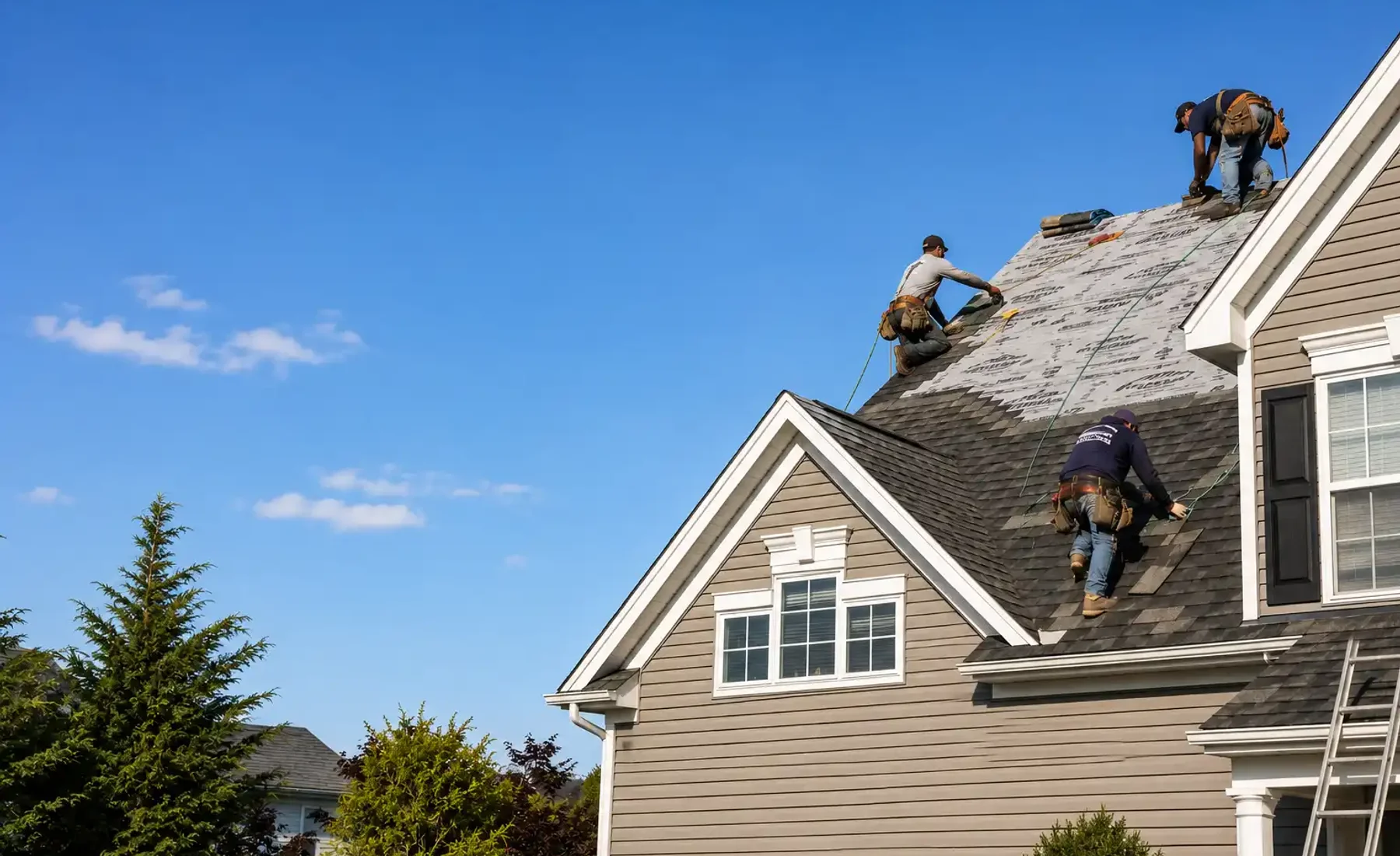
Cliffside Park’s dense blocks and multi-family buildings mean flat and low-slope roofs, shared walls and chimney chases that need careful flashing. We work on both single-family homes and small multi-unit properties here.
Homeowners in Cliffside Park get the same process we use everywhere: a hands-on inspection, a written itemized scope before anything starts, our own crew on site rather than subcontractors, and a satisfaction guarantee on the finished work. We have been doing this in North Jersey for more than 25 years.
If you are comparing quotes in Cliffside Park, call (862) 271-1225 and we will tell you plainly what the work needs — repair when repair is the right answer, replacement when it is not.
What the work includes
- Roof repair, replacement and 24/7 emergency leak response in Cliffside Park
- Chimney repair, repointing, rebuilds, liners and cleaning
- Siding installation and repair — vinyl and fiber cement
- Seamless gutters, guards, screens and cleaning
- Masonry: steps, walkways, patios, sidewalks and retaining walls
- Deck construction, structural repair and restoration
How construction permits work in Cliffside Park under New Jersey's Uniform Construction Code
Cliffside Park enforces the New Jersey Uniform Construction Code through its own local enforcing agency, like every municipality in the state. Applications for roofing, siding, deck and masonry permits go through the Borough’s construction officials and subcode officials, who review plans and inspect the work before signing off.
New Jersey’s Department of Community Affairs explains the system plainly: “Applications for construction permits are submitted to local enforcing agencies,” staffed by state-licensed construction officials, subcode officials and inspectors responsible for enforcing the Uniform Construction Code within their borough. Cliffside Park’s construction office administers that process at Borough Hall for every one- and two-family home in town.
What typically needs a permit here
- A roof replacement or tear-off, and most flat or low-slope re-roofing on the borough’s multi-family buildings.
- Siding installation that changes exterior wall material.
- New or rebuilt masonry structures such as retaining walls, steps and porches.
We handle the paperwork end to end — application, scheduled inspections, and the final sign-off — so you are not chasing the borough on top of managing a renovation.
Retaining walls and drainage on Cliffside Park's Palisades slopes
Cliffside Park sits atop the Palisades, a ridge of diabase rock roughly 200 million years old, and many lots step down toward a neighbor’s yard or the street. Retaining walls here have to manage both the slope and the water moving across it, which is different work than a flat-lot foundation repair.
National Geographic describes the Palisades as a line of diabase and basalt cliffs formed when magma intruded beneath the Newark Basin as the Pangaea supercontinent broke apart roughly 201 million years ago, then cooled into the dense rock underlying much of Bergen County’s ridge towns. On a sloped Cliffside Park lot, that means a retaining wall needs proper drainage behind it — gravel backfill and a drain line — so water pressure does not push the wall out over time, and it means excavation for a new wall footing can behave differently than in a town with deeper topsoil.
Where a yard grade change also touches a foundation, we look at both together rather than treating the retaining wall as a separate project from what happens at the house.
Masonry steps, stoops and sidewalks built for a hillside borough
Many Cliffside Park homes are reached by a run of masonry steps up from the sidewalk to the front door, since the borough’s blocks slope with the Palisades ridge. Steps and stoops here see more freeze-thaw stress at each tread edge, so repair quality and mortar choice matter more than on a flat entry.
The National Park Service’s technical guidance on historic masonry notes that a good repointing job, done with mortar matched to the original in composition and hardness, should last several decades, and often 50 to 100 years when the mortar mix is right. The same principle applies to a Cliffside Park stoop or a run of exterior steps: cracked or missing mortar at a tread edge lets water in, and repeated winter freezing widens the crack every season until the step itself is compromised and needs full rebuilding instead of a simple patch.
What we look at on a steps or stoop job
- Whether the existing mortar is deteriorated enough to need full repointing or just a localized patch at the worst joints.
- Whether the step footings have settled on the slope, which usually shows up as a step that has pulled away from the house or gone visibly out of level.
- Handrail and guard requirements where a run of steps rises past the height that triggers them under the residential code.
We also build and repair sidewalks and walkways where the slope has undercut a section over time, resetting the base course so the new work does not simply repeat the same drainage problem in a few years.
Siding, gutters and roofing for Cliffside Park's narrow two- and three-family lots
Cliffside Park’s building stock includes many two- and three-family homes on narrow lots, where a taller roof plane drains through less gutter length than a spread-out single-family house. Sizing the gutter and downspout correctly, and choosing a siding profile that fits a tight side yard, are the two details that most affect how well the exterior performs.
A three-story building concentrates more roof area over the same gutter run than a ranch-style home, so undersized troughs overflow in a hard rain even when they are clean. We size gutters and downspouts to the actual roof area rather than defaulting to whatever was there before, and route downspouts to daylight or a dry well where a narrow side yard leaves nowhere else for the water to go. On siding, vinyl and fiber cement both work well on tight lots; the deciding factor is usually clearance at the property line and whether the borough’s zoning setback affects trim detail at a shared wall.
Comparing retaining wall materials on a Palisades-ridge lot
Cliffside Park homeowners choosing a retaining wall material are usually weighing cost, height limits and how the wall will look against a masonry house. Segmental block, poured concrete and natural stone veneer each fit a different budget and a different maximum height before engineering review is required.
| Material | Typical use | What to weigh |
|---|---|---|
| Segmental concrete block | Low to mid-height garden and side-yard walls | Fast to build, wide color range, needs proper gravel backfill and drainage |
| Poured concrete | Taller walls or walls carrying a driveway load | Higher upfront cost, longest service life, needs engineered footing on a slope |
| Natural stone veneer over block or concrete | Walls visible from the street, matching a masonry front | Best match to stone or brick homes; adds cost over plain block |
Any wall over a certain height, or one that supports a driveway or a structure above it, needs an engineered design and a permit from the Borough before we build it. We walk every sloped-lot estimate with that threshold in mind so the quote already reflects whether engineering is required.
From Cliffside Park we also serve nearby Fort Lee and the rest of our North Jersey service area. Ready to start? Request a free written estimate.
Services available in Cliffside Park
NJ Gold Star Construction repairs and replaces asphalt shingle, flat and metal roofs across Berg…
We repair, repoint, reline and fully rebuild masonry chimneys throughout North Jersey, and we cl…
We install seamless aluminum and copper gutters, add guards and screens, and repair or clean exi…
We build and repair steps, walkways, patios, sidewalks, retaining walls and stone veneer across …
We install and repair vinyl, fiber cement and wood siding across North Jersey, including the wat…
We build new decks and repair existing ones across North Jersey — footings, framing, decking, ra…
Frequently asked questions
Do you serve Cliffside Park?
Yes. Cliffside Park is part of our regular service area for roofing, chimney, siding, gutter, masonry and deck work.
How fast can you get to Cliffside Park for an emergency?
We answer 24/7 and reach active leaks in Cliffside Park the same day whenever possible, tarping to stop water before the permanent repair is scheduled.
Are you licensed to work in Cliffside Park?
Yes. We hold New Jersey Home Improvement Contractor license #13VH13359900, carry full insurance, and pull permits with your municipality where the work requires them.
Does a retaining wall in Cliffside Park need a permit?
Often, yes. New Jersey’s Uniform Construction Code and Cliffside Park’s local enforcing agency generally require a permit for retaining walls above a certain height or walls that support a structure, driveway or roadway above them. Shorter garden-variety walls may fall outside that threshold. We confirm which applies to your wall before we finalize a design or a quote.
Why does my Cliffside Park gutter overflow even when it is clean?
It is usually undersized for the roof area draining into it, which is common on taller three-story homes with a shorter gutter run than the roof plane above. The fix is resizing the trough and downspouts to the actual roof square footage, not just replacing what was already there. We calculate this during the estimate rather than assuming the existing size was correct.
Can you match new masonry steps to an older Cliffside Park stoop?
Yes. We match mortar color and joint profile to the existing stonework or brick wherever a section of steps or a stoop needs partial repair rather than full replacement, following the same repointing principles the National Park Service recommends for older masonry. Where the whole structure has settled or cracked through, we rebuild it instead of patching over a structural problem.
- The New Jersey State Uniform Construction Code (general information) — New Jersey Department of Community Affairs, Division of Codes and Standards
- The Palisades, in the Shadow of New York City — National Geographic
- Preservation Brief 2: Repointing Mortar Joints in Historic Masonry Buildings — U.S. Department of the Interior, National Park Service
- Bulletin 19-1: Design Loads for Ground Snow, Wind and Seismic — New Jersey Department of Community Affairs, Division of Codes and Standards
Updated September 2026 · Reviewed by Edgar Lopez Gonzalez, owner · NJ HIC #13VH13359900
Licensed & insured. 25+ years in North Jersey. We answer 24/7 for leaks and storm damage.
- Town
- Cliffside Park, Bergen County
- License
- NJ HIC #13VH13359900
- Emergency service
- 24/7 — call (862) 271-1225
- Estimates
- Free, written and itemized